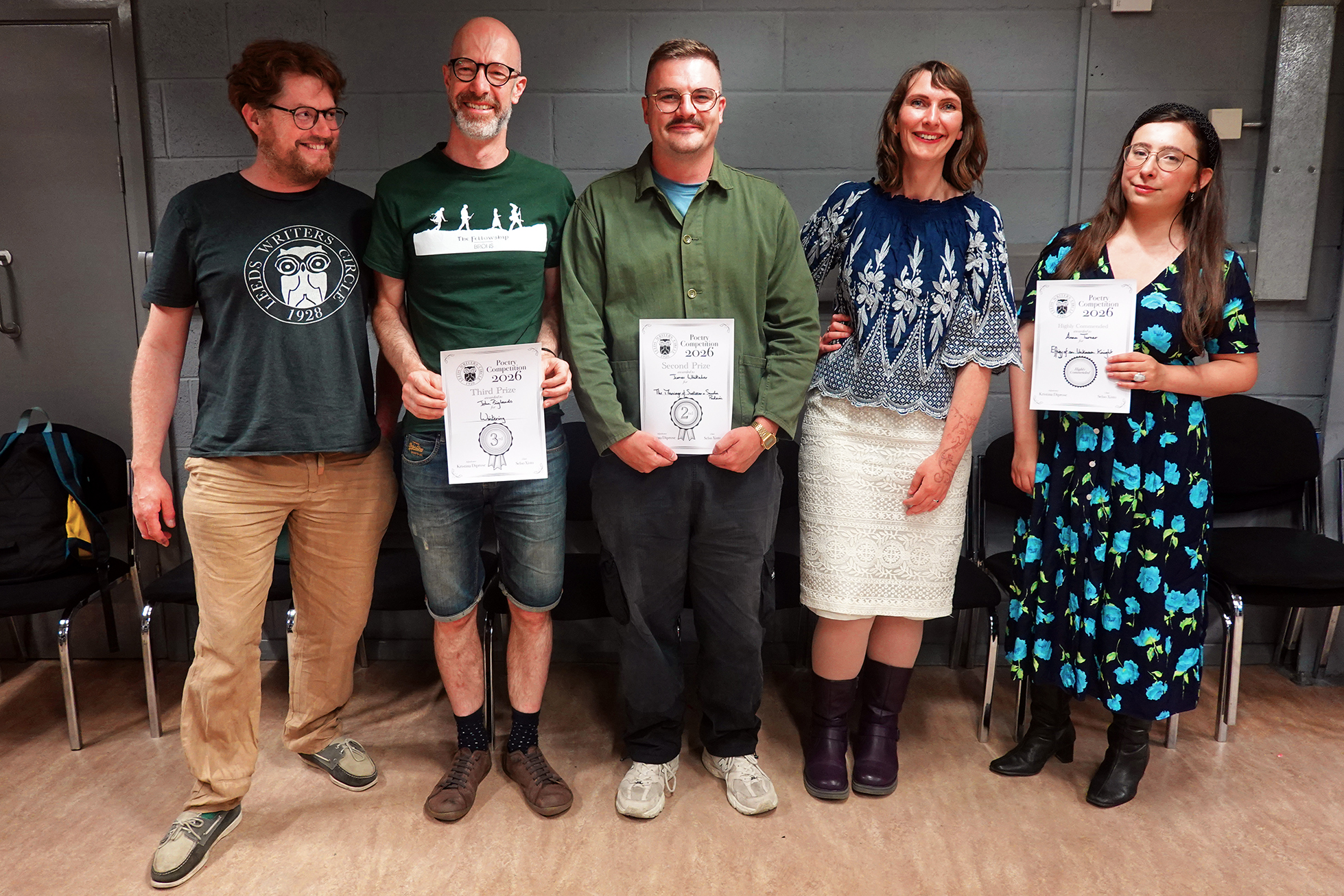
From left to right: Alex Offer (Co-ordinator and Compère), John Biglands, James Whittaker, judge Kristina Diprose, and Anna Turner.
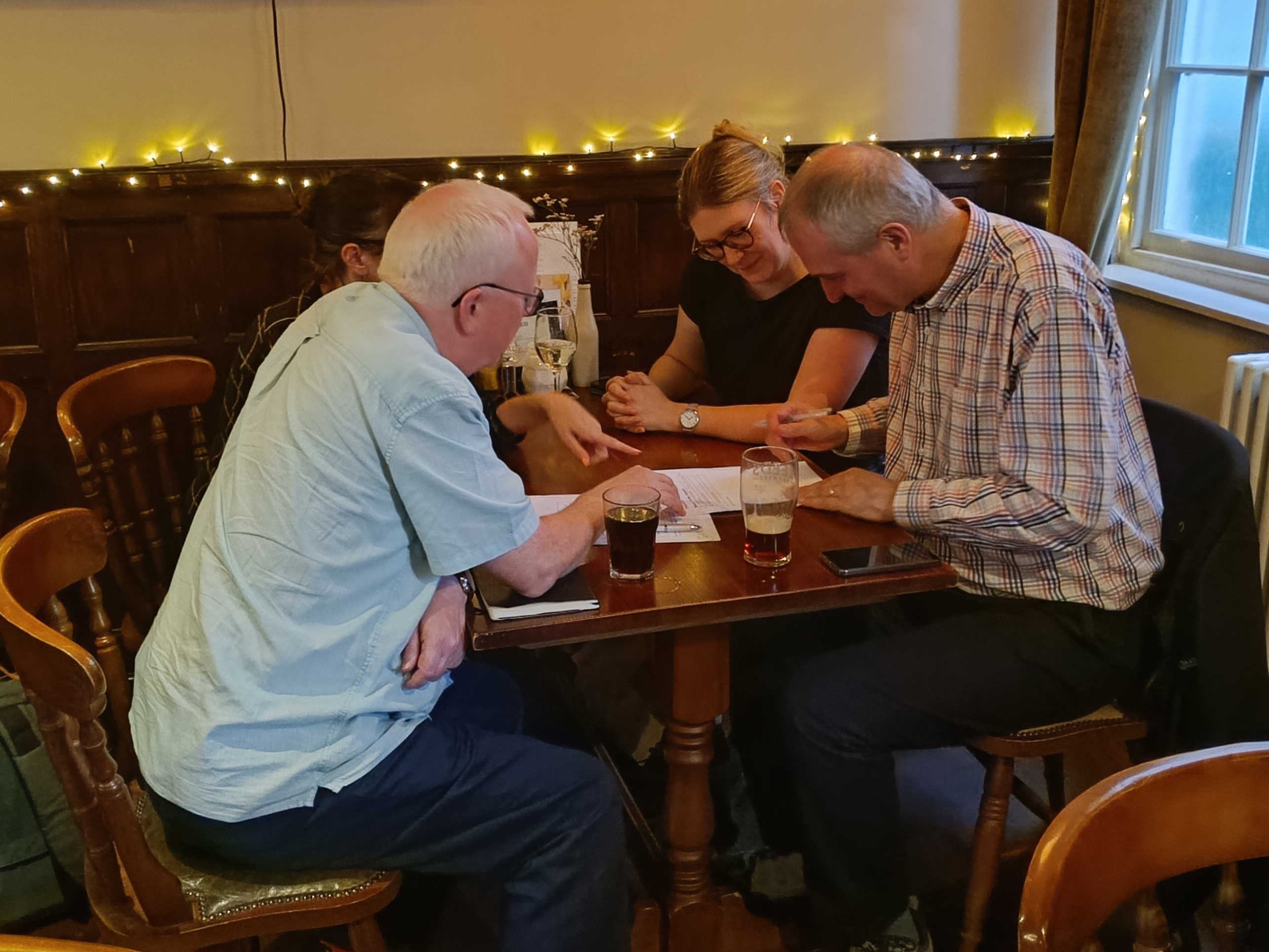
A group of 22 members gathered at the poetry adjudication to hear most of the 18 entered poems, followed by the very thoughtful and extensive feedback offered by our judge, Kristina Diprose. She introduced the judging with a few of her own poems and some general comments …
Coming from a personal preoccupation with nature writing, it was fascinating to see the different ways that writers interpreted Weathering for this competition. I expected the theme would lend itself to eco-poetry, but many of the entries found surprising and intriguing ways to approach the subject. It became a metaphor for grief, separation, displacement, puberty, transformation, homesickness, the need for rest, and the way love survives in the face of adversity. The variety of subject matters and styles made for an engaging collection of poems, and made my job very difficult!
As with all poetry competitions, judging is inevitably subjective. Another reader may well have picked up on other details that resonated for them across this set of poems. I hope my comments are useful. They are offered in the spirit of encouraging further development rather than as prescriptive feedback — these are your poems.
I particularly admired the ambition on display. Many poems attempted to tackle large emotional and philosophical ideas through inventive extended metaphors or unusual narrative perspectives. I got the sense that many of you had taken risks in your writing or tried something outside your comfort zone, and that was really encouraging to see. I think that’s where imagination comes in.
Across the collection, I found myself returning to the importance of specificity. The poems that made the strongest impression were rooted in precise images and moments that felt uniquely observed. When a poem gives us details that could only belong to that writer, it paradoxically becomes easier for the reader to enter its world. Even if it’s a world nothing like ours or a subject matter we know nothing about, those details make us believe in the poem and its speaker.
I was also struck by the variety of approaches to form. Entries included ballads, free verse, prose poetry, concrete and ekphrastic poems, each making different choices about shape, line breaks, rhythm and rhyme. When revising, it can be useful to look closely at the poem’s shape on the page. Sometimes a change in lineation, punctuation or spacing can unlock new possibilities.
For those who enjoy writing in rhyme or fixed forms, I’d encourage continued attention to how sound is functioning within the poem. Rhyme is at its strongest when it serves the poem’s meaning rather than forcing it into a corner. Reading a draft aloud remains one of the best ways to test whether it flows naturally.
Finally, I encourage you all to keep editing and experimenting. Almost every poem contained an original image, striking description, or memorable line. Often, the breakthrough comes from following an intriguing idea a little further.
Thank you for trusting me with your work. I thoroughly enjoyed spending time with these poems, and wish you every success with your future writing.
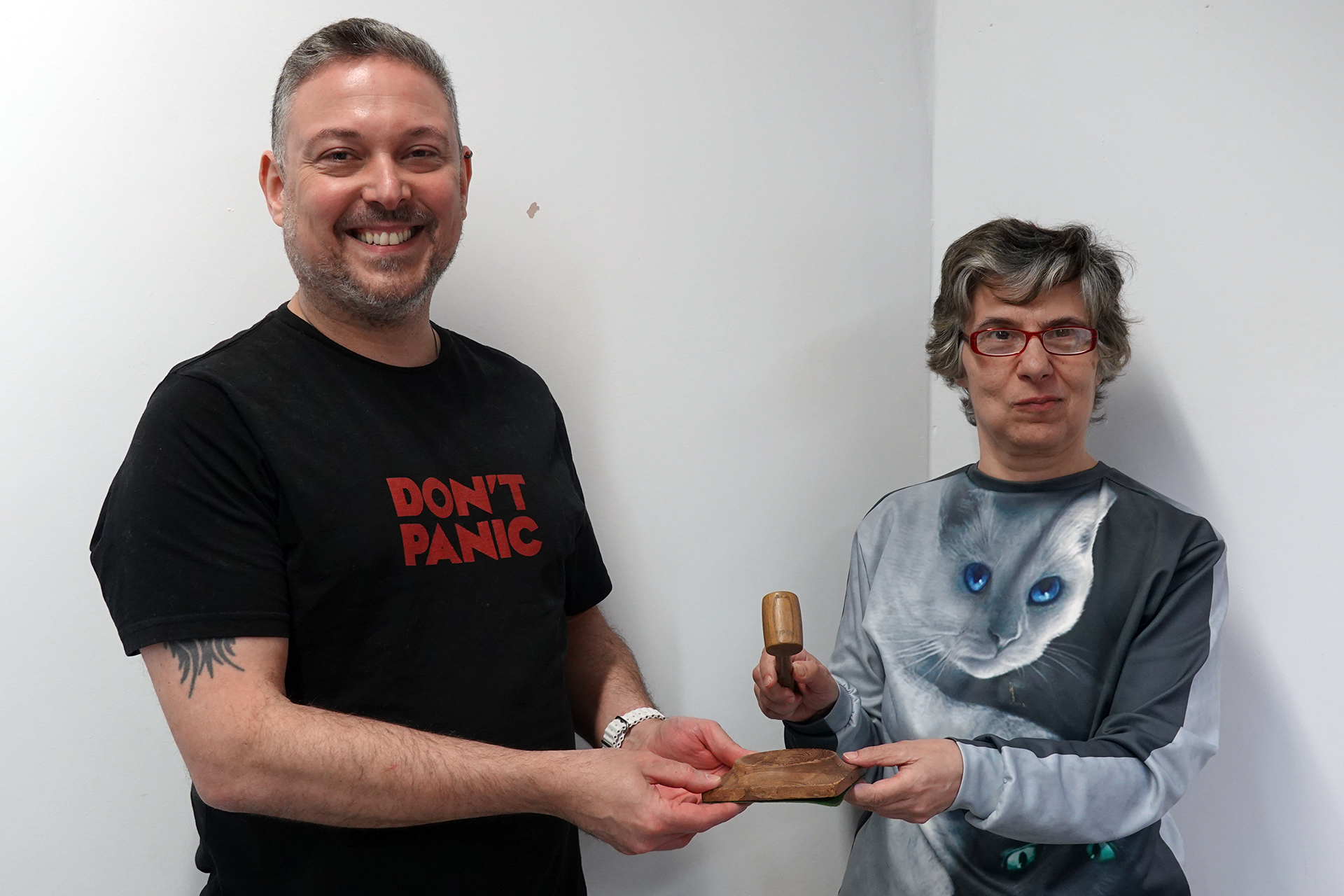
Kristina’s debut pamphlet Thin Spells has sold out its first print run but should be available again soon from Black Cat Poetry Press. Kristina deserves an award herself for the effort she put into judging and offering feedback. It made for a particularly special evening, despite both the overall winner and the winner of the Annavation Prize sadly not being able to come to receive their awards in person.
The Results
First: Osadolor Osayande: The Weathering of a Male Soprano
Second: James Whittaker: The Marriage of Svetozar & Sandra Pudaric
Third: John Biglands: Wintering
Highly Commended: Anna Turner: Effigy of an Unknown Knight
Annavation Prize: Rowan Amoako: The Death of a Dandelion